Diabetes is a chronic disease characterized by a chronic hyperglycemia in the blood that is to say an excess of sugar in the blood.

But, what is the cause to Diabetes ?
Diabetes is caused by the dysfonctionnement of the Pancreas.
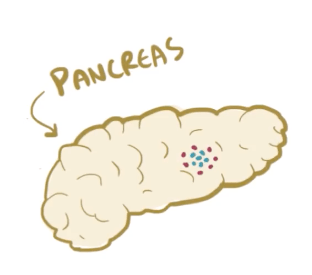
The Pancreas is in charge of detecting the augmentation of blood sugar level thanks to the Beta Cells of the Islets of Langerhans. When the sugar level increase (after a meal for instance) the Beta Cells secrete the Insulin, which is an Hormone. This hormone’s objective is to decrease the sugar level by acting on the muscles and on the liver to make all the sugar going in those organs.
In Diabetes, your body have trouble moving glucose (which is a type of sugar) from your blood into your cells. This leaves a high level of glucose in your blood but not enough in your cells. And remember that your cells need glucose as a source of energy. So not letting the glucose inner means that the cells starve for energy despise having glucose right at their door step (in the blood). In general the body control how much glucose is in the blood relative to how much get into the cells with two polypeptide hormons :
- Insulin : Insulin is used to reduce blood sugar level
- Glucagon is used to increase blood sugar level
Those two hormons are produced by the Pancreas, more precisely by the Islets of Langerhans :
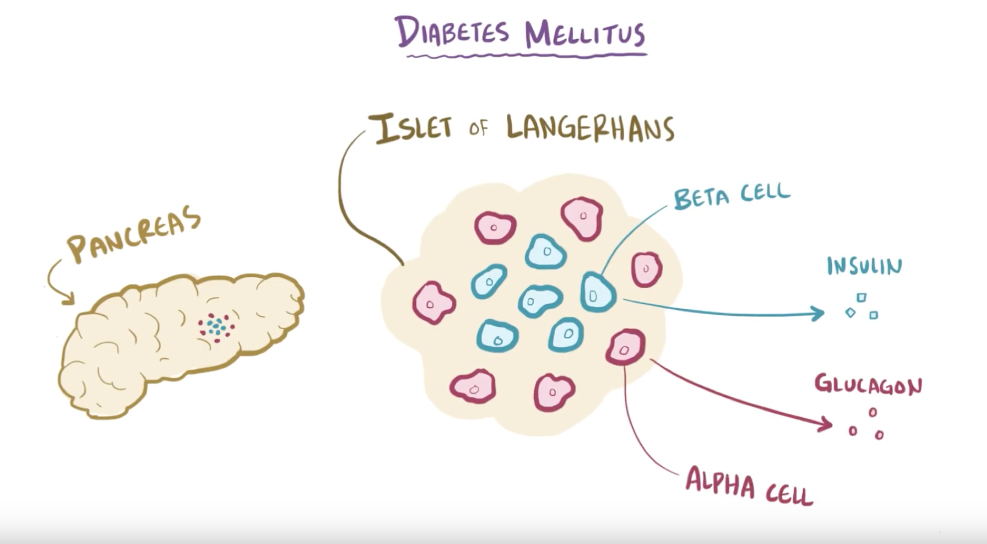
Insulin is secreted by the Beta Cells of the Islets of Langerhans, in the center of thoses Islets and Glucagon is secreted by Alpha cells in the peripherie of the islets of Langerhans.
But, in some patients, the Beta Cells of the Islet of Langerhans get destroyed :
- By an autoimmune mechanism (about 10% of diabetics)(also know as type I diabete) – your immune system turns against you and attack the pancreas using special antibodies to destroy it, because it doesn’t recognize it as being a part of you. This mechanism is frequently met after some infections. This type of diabate is usually met in very young patients.
- Because the patients has an unhealthy diet (90% of diabetic)(usually called Type II diabete) – if you consume too much sugar, your islet of Langerhans and your beta cells are going to secrete a lot of Insulin to keep your sugar level down, and after a long time (the diabetes peak is around 50 years) they will eventually get tired and would not secrete as much Insulin as they used to. So the insulin level will go down because your pancreas is tired and your sugar level will go up. But you could wonder what is the problem about your sugar level going up and up ?
Why our blood sugar level must always be regulated ?
There is something called Homeostasis. Our body loves to keep things regulated : our temperature, our sugar level, our cardiac frequency, our respiratory frequency which need to stay constant.
The sugar level is also a constant, its value is around 1,00 g/l. Of course after a meal the sugar level go up, and eventually go down after a certain time (thanks to Insulin)
| Target levels by type | Before meals | After Meals (2 hours after meal) |
| Non diabetic | 1,10 g/l | 1,40 g/l |
| Diabetic | 1,26 g/l | 2,00 g/l |
The sugar in the blood can attack the big vessels (which results in macroangiopathy) but also the small vessels and can cause microangiopathy. (stroke, kidney failure, blindness, retinopathy). That’s why we need to keep our sugar level regulated, to avoid chronic and long term diseases.
What are the symptoms of Diabetes ?
The symptoms are regrouped under the term of cardinal syndrom. In this syndrom there is :
- polyuria : it’s the fact of urinating a lot
- polydipsia : it’s the fact of drinking a lot (many liters a day)
- polyphagia : it’s the fact of eating a lot.
- glycosuria : there is glucose in the urine
- rapid and massive weight loss
All those symptoms are due to the absence of insulin. So this syndrom is typical of diabetes.
What are the different treatments of Diabetes ?
Diabetes, thankfully has a lot of treatments available. I will divide those treatments in two parts : firstly the treatment of type I Diabete and then the treatment of type II diabetes.
Type I diabete treatment
There is not a lot of treatment available for the type I diabete, mainly because in this case the beta cells of the islets of Langerhans get destroyed so there is NO insulin. So the purpose of the treatment would be to replace the missing insulin thanks to injection of insulin.
There is several type of insulin depending on the duration of action
- Insulin that are active during 24 hours, it’s simulate the basal secretion of insulin – it’s the slow insulin
- Insulin that are active only 2 hours, and it’s simulate the post meal peak of insulin – it’s the rapid insulin
- So our patients need to take the two types of insulin on a « basal – bolus » model : An injection of rapid insulin after each meal and one injection of slow insulin before bed. The objective of that scheme is to really simulate the natural and physiological secretion of insulin.
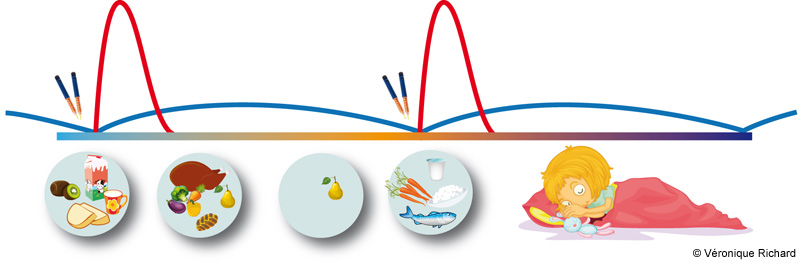
it’s important to know that those insulin are taken by injection, the patient can do the injection by himself with no problem. Our patient must also be aware of the insulin pump.
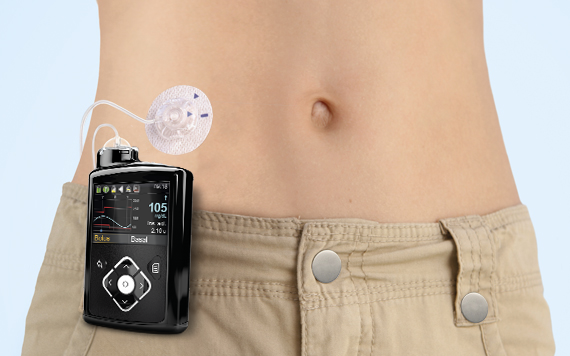
This medical device is capable of mesuring continuously the sugar level and adapating the secretion of insulin by itself.
Type 2 diabete treatment
The first treatment of Type 2 diabete is Metformine which is capable to improve the hepatic and muscular cells sensibility to insulin which is what we WANT to decrease the sugar level. This medicine have some side effects : it can create some diarrhea at the start of the treatment (during 1 to 2 weeks), one way of avoiding those side effects is to increase slowly the daily dosage of Metformine (firstly 0,5g a day, then 1g a day then 1,5 g a day …) and you must take metformine with your meal. The other side effect of Insulin is more rare but is a very serious one. It is the lactic acidosis which is caused by the accumulation of lactic acid in the body. It’s due to bad tissular oxygenation, it’s very serious and if one member of your family have this side effect you must act fast and call emergency.
If you have an chirurgical intervention of if you need to take a iodinated contrast medium then you need to stop your metformine 48h before, please discuss that with your doctor first.
The second type of treatment of type II diabete are the insulin secretor, they help the Beta Cells to secrete the Insulin. Those medicine are Glimepiride, Gliclazide Glibenclamide and Repaglinide. The main side effect of those product is that it can cause hypoglycemia which is not what we want.
The third type of treatment are the inhibitor of Alpha Glucosidase, DPPIV inhibitor and GLP1 like.
 A French Pharmacist in Paris